1994-2002 [Subscribe to Daily Digest] |

The system is as follows:
A nylon TEE fitting in the valve cover. Small hose from that to the trottle body (TB). If a turbo, there is an inline plastic check valve in it. The TB has a small drilled orifice in it near the level of the throttle shaft. The larger branch of the tee has a larger hose, going back to the intake downstream of the air filter for a turbo and downstream of the mass air flow sensor (MAF) on a normally asperated engine (NA).
The turbo needs a check valve to prevent boost pressure from reversing the flow.
The small hose from the TEE to the TB gets very hard. The TEE is brittle from contamination and heat. Trying to remove it will break the TEE. And removing from the check valve, where used, might damage the check valve. So you would be better off with new hose in hand and cutting the hose away to avoid overstressing and breaking the plastic bits.
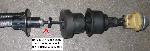
If you get the small hose free from the TEE, as idle there should be a flow that you can detect or at least a suction. Some carb cleaner thru the hose might clean the orifice in the TB, but might trash a check valve. If there is suction thru a check valve, you know that it flows. With the engine off, apply suction to the valve to confirm that it blocks reverse flow. They charge a lot for that silly valve, so don't replace needlessly. The check valve has a directional indicator on it, don't get it backwards. In the turbo, a short rubber hose goes from the TEE to a steel hard pipe. That hose can swell from the vapors. If it does not fit well, clamps or wire ties will ensure a leak proof fit.
When the small hose and TB orifice cannot handle the volume if blowby gasses from the crankcase, those gases vent through the larger TEE connection and with a turbo, they go through the turbo compressor and make an oily mess of the intercooler.
So no bar ratings on the check valve, it just opens when it sees negative pressures from the TB orifice. If that check valve will not flow, the larger TEE branch will still flow major abouts and I can't see that the absence of flow through the check valve could lead to high crankcase pressures.
posted by 65.68.10...
No Site Registration is Required to Post - Site Membership is optional (Member Features List), but helps to keep the site online
for all Saabers. If the site helps you, please consider helping the site by becoming a member.
 |
 |
 |
 |
 |